

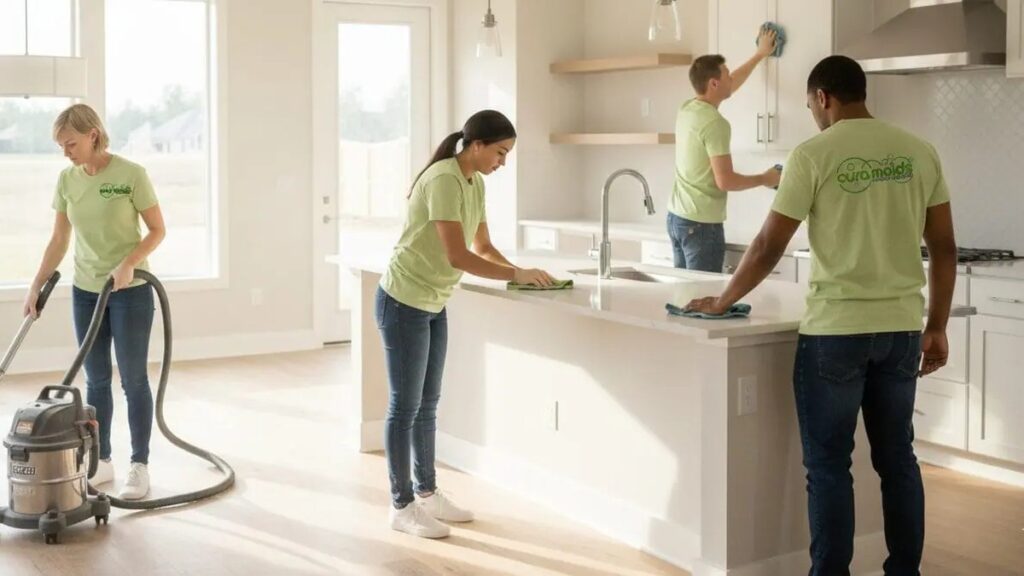
Remodel Dust: How to Keep It Contained, Clean It Safely, and Know When to Call a Pro
Reading Time: 7 minutes | By Cura Maids Team
You finish the kitchen remodel, the contractor drives away, and then you notice it: a pale, powdery film on the counters, the window sills, the tops of the doors, and somehow inside the cabinets you have not even opened yet. Drywall dust is one of the most stubborn messes a home project leaves behind, and it keeps showing up for days.
Remodel dust is not like everyday dust. It is much finer, it travels through the air and your HVAC system, and a regular broom or household vacuum can send it right back up. The good news is that a few smart choices before, during, and after the work make a big difference, whether you are in a Holly Springs new build or a 1970s ranch getting a fresh kitchen. This guide walks through how to clean drywall dust and control remodel dust in your home, step by step.
If your house already feels dusty all the time, even without a project, that is a different problem. See why Raleigh homes get dusty so fast for the red clay and humidity story.
Quick Answer: How Do I Handle Drywall and Remodel Dust?
| Stage | The Key Move |
|---|---|
| Before | Seal the work area with plastic, cover vents, close doors |
| During | Ask for dust-controlled sanding and a daily tidy-up |
| After | Clean top to bottom: HEPA vacuum first, then damp wipe, then mop |
| Follow-up | Do a second pass in 2 to 3 days and change the HVAC filter |
Table of Contents
Why Remodel Dust Is Different
Sanding drywall joint compound, cutting tile, and demolishing old surfaces all create very fine particles. Here is what makes them harder to deal with than normal household dust:
- It floats. Fine particles stay in the air long enough to drift into other rooms
- It rides your HVAC. If the system runs while the work is happening, dust can be pulled through the whole house
- It clogs ordinary vacuums. Without a good filter, a vacuum can pass the finest dust right back into the air
- It keeps settling. Expect more dust to land on surfaces for a few days after the work stops
Knowing this changes the plan. You do not just clean at the end. You contain the dust at the start, limit it during the work, and clean in the right order afterward.
Before the Work: Contain It
Ten minutes of prep saves hours of cleanup. Whether you are doing the work yourself or hiring a contractor, talk through this list first.
- Seal the work area with plastic sheeting. Tape it at the ceiling, walls, and floor so there is no gap
- Cover the vents in the work area. EPA's lead-safe guide tells contractors to close and cover all ducts opening in the work area with taped-down plastic sheeting
- Close doors and windows in the work area, and consider a dust mat or damp towel at the doorway
- Cover floors and furniture in the path between the work area and the door
- Move out what you can. Anything you can remove from nearby rooms will not need cleaning later
- Plan the HVAC. Ask your contractor whether to keep the system off in the work zone and how they will handle the return vents
During the Work: Keep It From Spreading
If a contractor is doing the work, a few simple questions set expectations. They do not have to be confrontational. Good contractors expect them.
Questions worth asking
- Will sanding use a vacuum attachment or other dust-controlled method?
- Will the work area be sealed off from the rest of the house?
- Will you clean up at the end of each day, and with what kind of vacuum?
- Will workers avoid tracking dust through the rest of the house?
If you are doing the work yourself, wear a well-fitted mask rated for fine dust and eye protection while sanding, and clean up as you go instead of leaving it all for the end.
Project almost finished?
Tell us about it and we will tell you how we would handle the cleanup. Questions are free.
Call or Text: (919) 480-1051
✓ Background-Checked Teams | ✓ Free Quotes | ✓ Serving Triangle Since 2015
After the Work: How to Clean Drywall Dust
The order matters more than the effort. Clean from high to low, so dust you knock down does not land on surfaces you already finished. EPA's lead-safe renovation guide uses the same approach, working from higher surfaces to lower ones.
Step by step
| Step | What to Do |
|---|---|
| 1. Leave the plastic up | Keep the sealed area closed until the first cleaning pass is done |
| 2. Vacuum high surfaces | Ceiling corners, light fixtures, tops of cabinets and doors, with a HEPA vacuum if you can get one |
| 3. Wipe walls and surfaces | A damp microfiber cloth, rinsed often. Dry cloths just push dust around |
| 4. Do the floors | HEPA vacuum first, using a beater bar on carpet, then damp mop hard floors |
| 5. Handle the vents | Wipe vent covers and change the HVAC filter once the dusty work is over |
| 6. Wash soft items | Launder curtains, covers, and throws that were nearby |
| 7. Come back in 2 to 3 days | Dust keeps settling, so wipe again before you call it done |
According to the EPA's lead-safe renovation booklet, the HEPA vacuum should have a beater bar when cleaning carpets and rugs, and uncarpeted floors should be mopped thoroughly. Surfaces other than carpet or upholstery get a damp cloth.
✓ Do
✓ HEPA vacuum
✓ Damp microfiber cloths
✓ Clean high to low
✓ Rinse cloths often
✓ Change HVAC filter
❌ Avoid
❌ Dry sweeping
❌ A basic vacuum with no good filter
❌ Dry dusters and feather dusters
❌ Compressed air or leaf blowers
❌ Skipping the second pass
Older Homes: A Safety Note
Built before 1978? Homes from that era are more likely to have lead-based paint, and sanding, cutting, or replacing windows can create hazardous lead dust. The EPA recommends hiring a contractor certified and trained in lead-safe work practices for these projects. Do not dry sweep or dry sand a project like this on your own.
If you are in an older part of Raleigh, Durham, Cary, or Garner, ask your contractor about this before the work starts, not after the dust has settled.
DIY or Call a Pro?
A single-room touch-up is a reasonable weekend job. The bigger the project, the more the cleanup grows.
✓ Reasonable to DIY
✓ One small room
✓ Minimal sanding
✓ A HEPA vacuum on hand
✓ No deadline pressure
❌ Consider a pro
❌ Whole-kitchen or multi-room remodel
❌ Dust reached the HVAC or bedrooms
❌ New finishes you cannot risk scratching
❌ A move-in or listing date coming up
For large projects, a team that has done it before saves time and protects new surfaces. Our post-construction cleaning Raleigh NC page explains how our service works, what is included, and pricing ranges. If you are in Holly Springs, our house cleaning Holly Springs NC team can also help.
Done With the Dust?
Let us handle the cleanup so you can enjoy the finished project.
Book Now:
(919) 480-1051✓ Background-Checked Teams | ✓ Free Quotes
✓ 77-Star Cleaning Checklist | ✓ Serving Triangle Since 2015
FAQs: Drywall and Remodel Dust
How do I clean drywall dust?
Work from high to low. HEPA vacuum high surfaces first, wipe walls and surfaces with a damp microfiber cloth, then vacuum and mop the floors. Avoid dry sweeping and dry dusters, which push fine dust back into the air. Change the HVAC filter and repeat the wipe-down a few days later.
How long does construction dust last in a house?
Fine dust can keep settling on surfaces for several days after the work ends, and it can reappear if it got into your HVAC system. Plan a second cleaning pass two to three days later, and change the filter once the dusty work is complete.
How do I protect my house from dust during a remodel?
Seal the work area with taped plastic sheeting, cover the vents in that area, close the doors, protect floors along the path to the exit, and ask your contractor about dust-controlled sanding and daily cleanup. Move anything you can out of nearby rooms.
Can I use a regular vacuum for drywall dust?
A regular vacuum with a basic filter can blow the finest dust back out. A HEPA vacuum is the better choice. EPA's renovation guidance also calls for a beater bar on the HEPA vacuum when cleaning carpets and rugs.
Is renovation dust dangerous in an older home?
It can be. Homes built before 1978 are more likely to have lead-based paint, and sanding or cutting can create hazardous lead dust. EPA recommends hiring a contractor trained in lead-safe work practices for those projects.
Does Cura Maids clean up after remodels in Holly Springs and the Triangle?
Yes. Our post-construction cleaning page explains our process and pricing ranges, and we offer free quotes. We serve Raleigh, Durham, Cary, Wake Forest, Apex, Holly Springs, Morrisville, Garner, and Fuquay-Varina.
The Bottom Line for Holly Springs Homeowners
Remodel dust is a planning problem more than a scrubbing problem. Contain it before the work starts, ask for dust control during it, and clean from high to low afterward with the right vacuum and damp cloths. Do a second pass a few days later, and if the project was big or your home is older, bring in people who have done it before. A little prep makes the finished room worth looking at.
Ready to Enjoy the Finished Project?
When the contractors are gone and the dust is the only thing left, we can take it from there.
At Cura Maids, we bring background-checked, reliable teams to Triangle homes. Since 2015.
Serving Raleigh, Durham, Cary, Wake Forest, Apex, Holly Springs, Morrisville, Garner, and Fuquay-Varina.
Let's get your home dust-free.
(919) 480-1051 Request Free Quote✓ Free Quotes | ✓ Reliable Teams
✓ 77-Star Cleaning Checklist | ✓ Background-Checked Teams | ✓ Serving Triangle Since 2015
#HollySpringsNC #DrywallDust #TriangleNC #CuraMaids #RaleighNC #DurhamNC #CaryNC #ApexNC #WakeForestNC

